BMI Calculator
Enter your height and weight to get your BMI and the corresponding WHO category. Switch between metric and imperial units.
How it works and known limits
How the result is calculated
BMI is weight in kilograms divided by height in metres squared (kg/m²). The calculator converts imperial inputs using 1 lb = 0.453592 kg and 1 in = 0.0254 m before applying the same formula, then rounds the displayed value to one decimal place.
What the categories mean
The tool uses the WHO adult cut-offs: below 18.5 underweight, 18.5–24.9 normal range, 25–29.9 overweight, and 30 or above obese. These thresholds are for adults aged 20 and over; they do not apply to children, adolescents or pregnant people.
Limits you should know
BMI is a screening measure, not a diagnosis. It cannot distinguish muscle mass from fat mass and ignores age, sex, ethnicity and body composition. Athletes and older adults are commonly misclassified. For health decisions, use it only as a starting point and consult a qualified clinician.
How to calculate BMI (with screenshots)
Compute your Body Mass Index in metric or imperial units and see the WHO weight category.
Open the BMI Calculator
Open the BMI Calculator page. The weight is where your work begins; the result appears on the right.
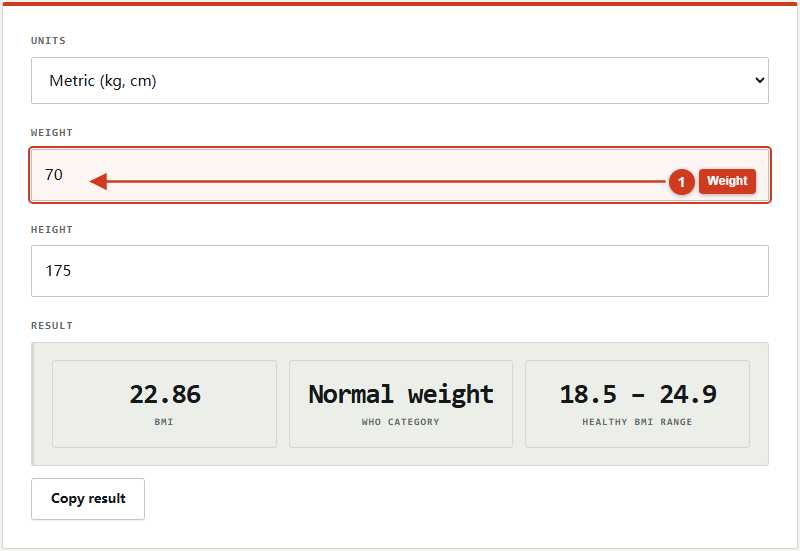
Enter your input
Enter your weight. This example uses 70 kilograms.
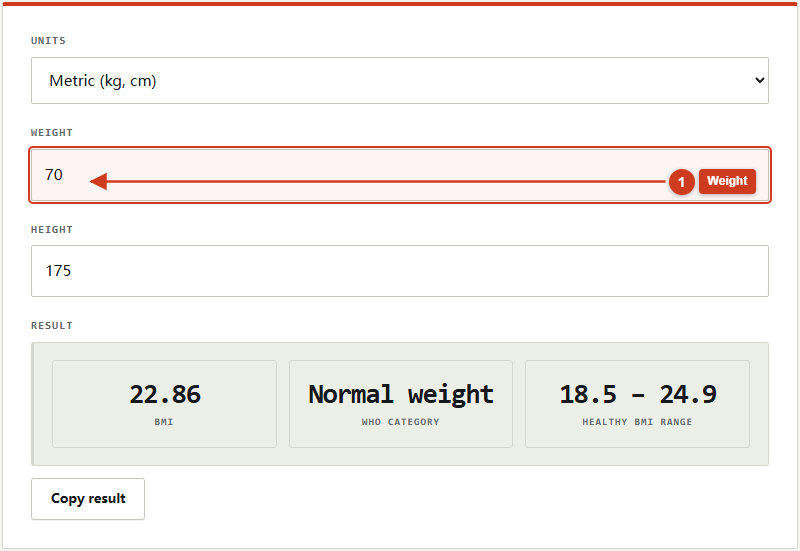
Set the options
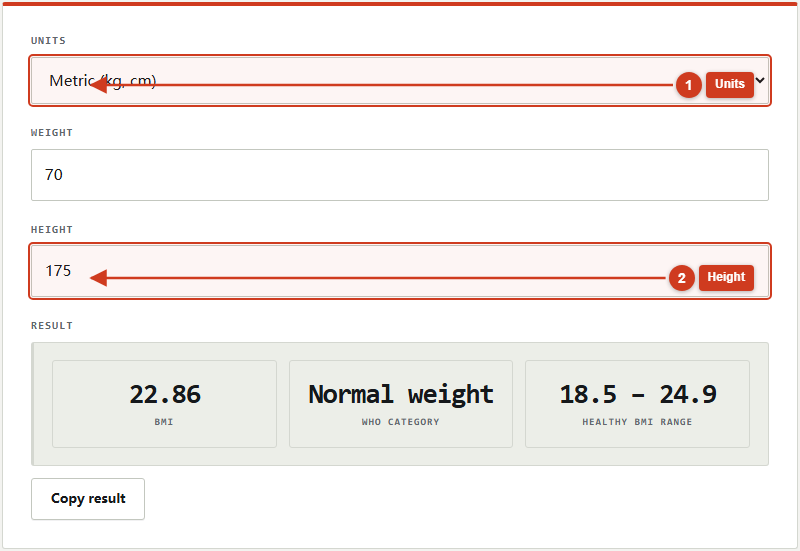
Choose metric or imperial units. Metric is selected here. Enter your height in centimetres for metric, or inches for imperial.
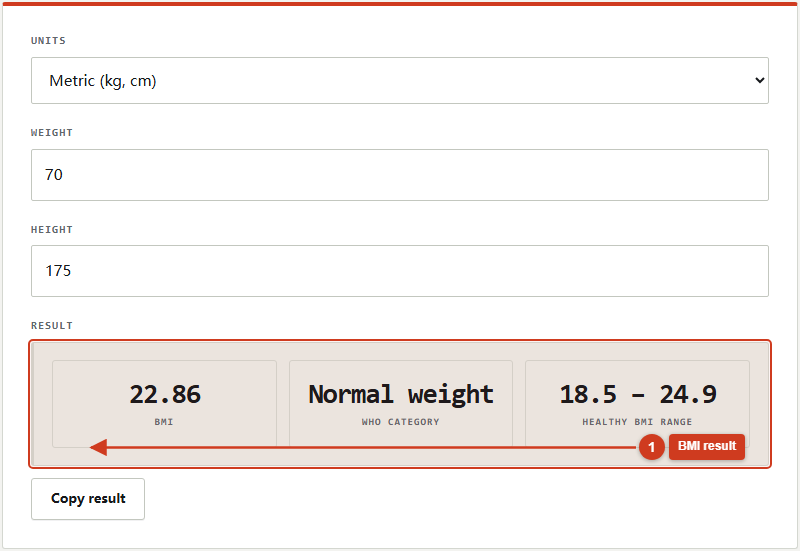
Read the result
The result shows the BMI value, the WHO category and the healthy BMI range, updated as you type.
Tip: BMI is a screening measure, not a diagnosis — it does not account for muscle mass or age.
Frequently asked questions
How is BMI calculated?
Weight in kilograms divided by height in metres squared. For imperial units the tool converts automatically.
What do the categories mean?
Under 18.5 underweight, 18.5–24.9 normal, 25–29.9 overweight, 30 or above obese, using WHO adult thresholds.
Is BMI a measure of health?
BMI is a screening tool, not a diagnosis. It does not distinguish muscle from fat and ignores age, sex and body composition.
Is my data stored?
No. The calculation happens in your browser and nothing is transmitted.
Page last reviewed: