Case Converter
Paste text and switch between seven common naming conventions with a single click.
How it works and known limits
How words are split
Before converting, the tool inserts a space between a lowercase and an uppercase letter, and treats underscores and hyphens as separators. That means HTTPServer splits into HTTP and Server, then each word is normalised according to the selected case.
Known limits
All-caps identifiers such as APIKEY stay as one word because there is no lowercase-to-uppercase boundary. Acronyms you want preserved need to be reinserted manually. Numbers remain attached to the word they follow.
Practical uses
Use snake_case for Python constants and database columns, kebab-case for CSS classes and URL paths, camelCase for JavaScript variables and CONSTANT_CASE for config keys. UPPER and lower operate on the raw input rather than on the split words.
How to convert text case (with screenshots)
Convert text to upper, lower, title, camel, snake, kebab or constant case in one click.
Open the Case Converter
Open the Case Converter page. The text is where your work begins; the result appears on the right.
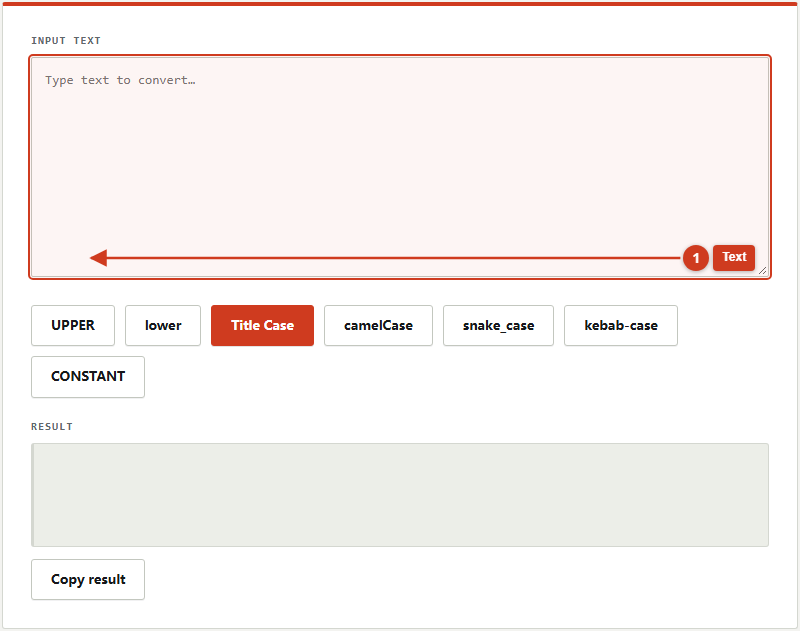
Enter your input
Type the text you want to convert into the input box. The buttons below apply different case styles.
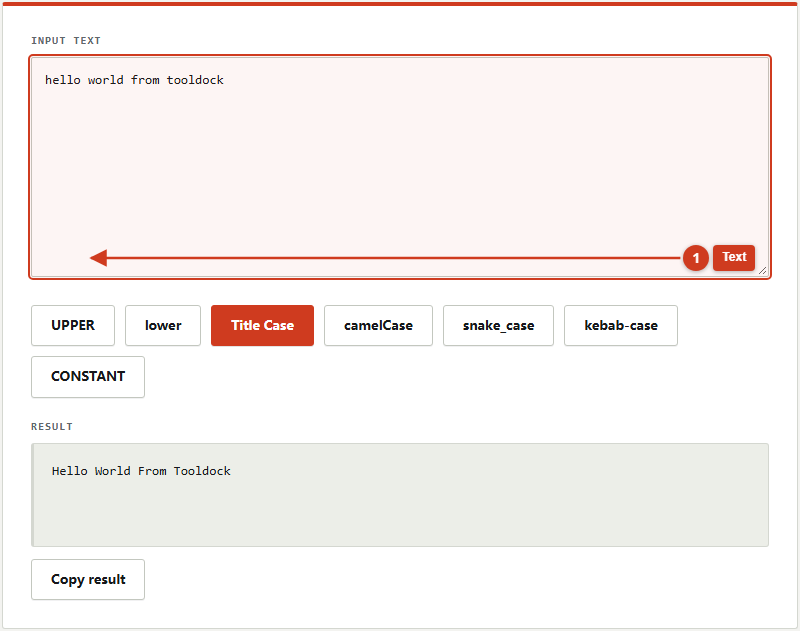
Run the tool
Click Camel case to join the words into camelCase. The converted text appears in the result box. Try the other buttons for snake_case, kebab-case and more.
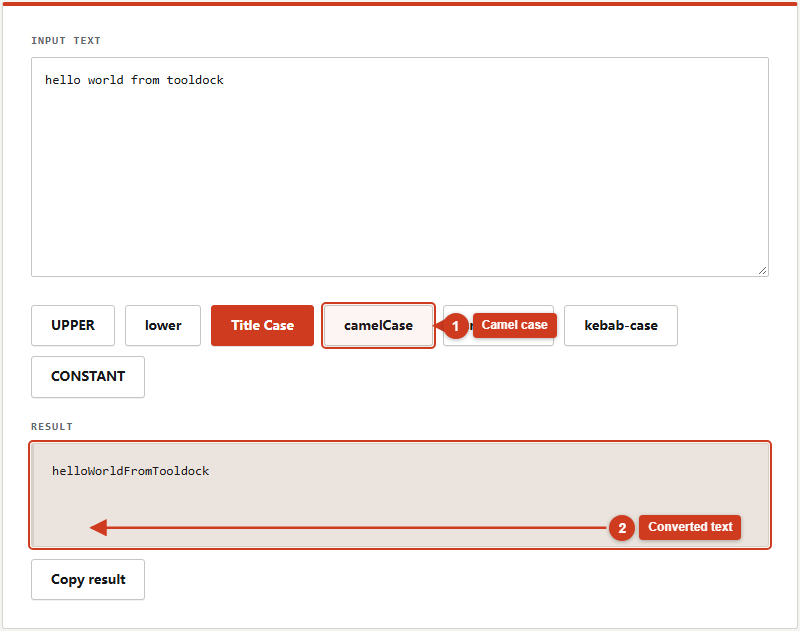
Tip: The converter first splits camelCase, underscores and hyphens, so it can reformat existing identifiers.
Frequently asked questions
Which cases are supported?
UPPERCASE, lowercase, Title Case, camelCase, snake_case, kebab-case and CONSTANT_CASE.
How are acronyms handled?
They are treated as normal words and normalized according to the selected case.
Is my text uploaded?
No. All conversions happen in your browser.
Can I convert identifiers with numbers?
Yes. Numbers are preserved and treated as part of the word they follow.
Page last reviewed: